My research goal is to build the wireless networks that let AI leave the data centre and act in the physical world, so that robots, vehicles, drones and satellites can sense, learn and act together. I combine model-based optimisation with machine learning to design them, from cell-free massive MIMO and millimetre-wave networks that keep links alive when a beam is blocked (my DECRA project) to wireless federated learning, targeting systems that are energy-efficient, ultra-reliable, low-latency, and scalable. My current interests include reconfigurable antennas, semantic communication, and federated learning across space, air and ground.
Prospective students: I am recruiting a funded PhD student for my ARC DECRA project, and Master of Research students, for 2027. See how to apply, then fill out this interest form or email me.
Current project
Cell-Free Wide-Area mm-Wave Communications
ARC DECRA, DE260100816, 2026-2029, lead CIAU$529,672
Martin Andersson, Tung T. Vu, Pål Frenger, Jan Åslund, Erik G. Larsson
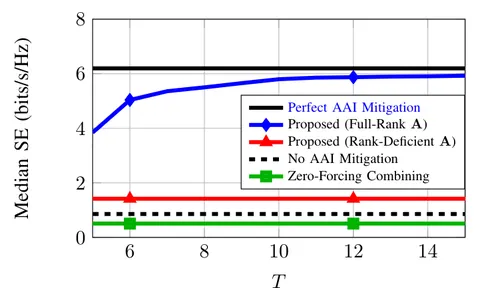
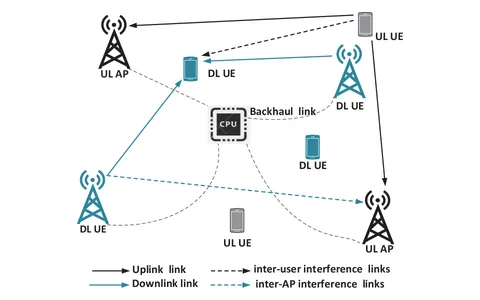
Uses the fact that channels between access points change slowly to estimate them alongside the uplink data, suppressing the interference that downlink access points cause to uplink ones.
Chongzheng Hao, Tung T. Vu, Hien Q. Ngo, Minh N. Dao, Xiaoyu Dang, Chenghua Wang, Michail Matthaiou
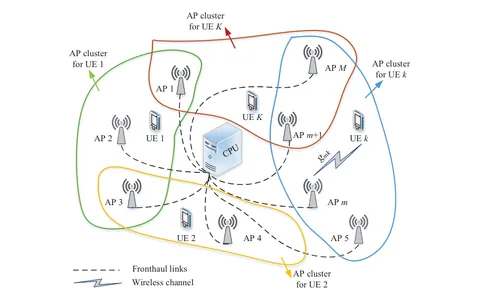
Chooses which access points serve each user and at what power to maximise the total data rate, with a learning-based method (JointCFNet) for small networks and a fast gradient method for large ones.
Muhammad Farooq, Tung T. Vu, Hien Q. Ngo, Le-Nam Tran
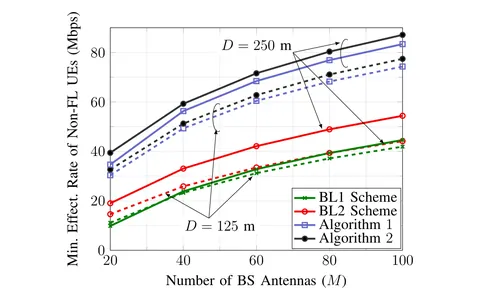
Lets one massive MIMO base station serve federated-learning users and other users on the same time and frequency resources, keeping each learning round within its deadline while maximising the lowest rate among the other users.
Canh T. Dinh, Tung T. Vu, Nguyen H. Tran, Minh N. Dao, Hongyu Zhang
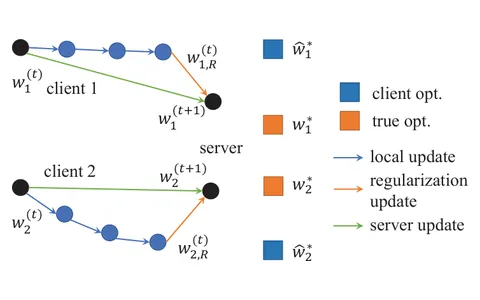
Treats federated learning on uneven client data as multi-task learning linked by a graph, giving one framework for standard and personalised federated learning and two algorithms (FedU, dFedU) with proven convergence rates.
Mohammadali Mohammadi, Tung T. Vu, Hien Q. Ngo, Michail Matthaiou
Turns half-duplex access points into a virtual full-duplex cell-free network by assigning each to uplink or downlink, giving about 30% more spectral efficiency and up to 200% more energy efficiency than half- or full-duplex schemes.
Tung T. Vu, Hien Q. Ngo, Minh N. Dao, Duy T. Ngo, Erik G. Larsson, Tho Le-Ngoc
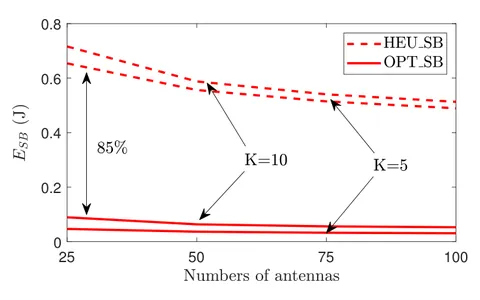
Designs massive MIMO for federated learning in three ways (synchronous, asynchronous and session-based) to cut the energy the base station and users spend on each learning round without missing its deadline.
Tung T. Vu, Duy T. Ngo, Hien Q. Ngo, Minh N. Dao, Nguyen H. Tran, Richard H. Middleton
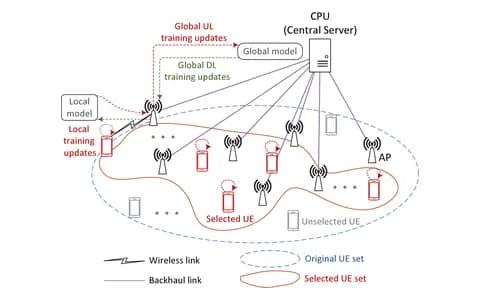
Picks the users with the best links, and sets their power and processing speed, to cut the total time federated learning takes in cell-free massive MIMO while keeping enough users for good learning.
Tung T. Vu, Duy T. Ngo, Nguyen H. Tran, Hien Q. Ngo, Minh N. Dao, Richard H. Middleton
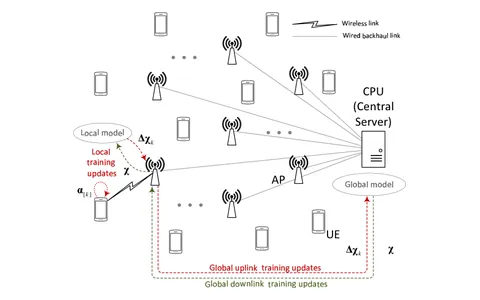
Proposes cell-free massive MIMO as a stable network for federated learning, and jointly tunes local accuracy, power, data rate and processing speed to cut training time by up to 55% over baselines.
Tung T. Vu, Duy T. Ngo, Minh N. Dao, Salman Durrani, Duy H. N. Nguyen, Richard H. Middleton
Maximises the energy efficiency of cloud radio access networks whose fronthaul links have limited capacity, and finds that sharing data over the fronthaul beats compressing it.
Tung T. Vu, Duy T. Ngo, Minh N. Dao, Salman Durrani, Richard H. Middleton
Decides which cache-equipped radio heads serve which users, and with what rates and precoding, in content-centric cloud radio access networks; edge caching improves both spectral and energy efficiency.
Technical talk at the Australian Communications Theory Workshop (AusCTW'24), 4-7 February, Melbourne, Australia: "Interference management for dynamic full-duplex cell-free networks".