Publications

45 entries: 22 journal articles, 20 conference papers, 1 book chapter, 2 patent applicationsGoogle Scholar

Year
Topic

Showing 45 of 45

2026

2025

PCT application, WO 2025/052272 A1Pending

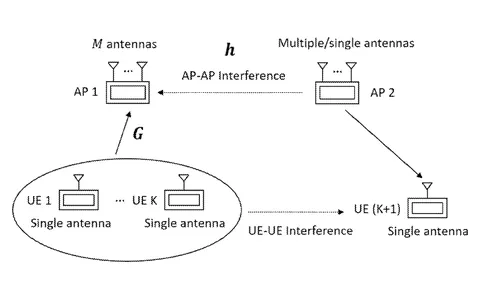
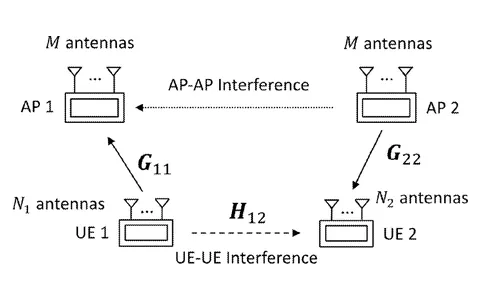
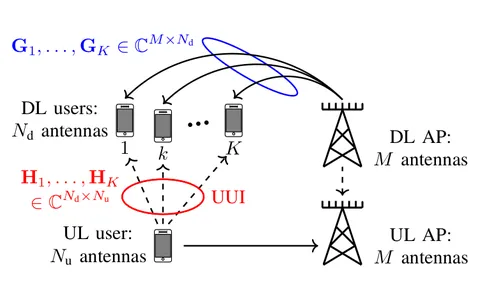
User-to-User Interference Mitigation

Pål Frenger, Tung T. Vu, Erik G. Larsson, Martin B. Andersson

Describes how a device can suppress the interference another device causes in dynamic TDD networks, by estimating the channel between them and steering a beam null towards it.

IEEE Access 2025

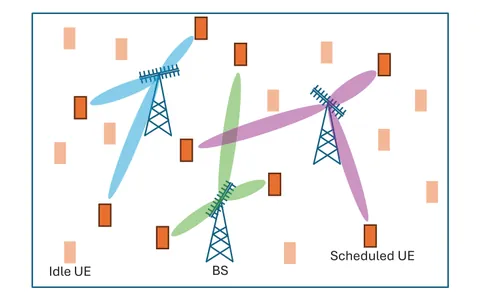
Base Station Beam Scheduling for mmWave Networks With Full-Frequency Reuse

Tung T. Vu, Swaroop Gopalam, Iain B. Collings, Stephen V. Hanly, Hazer Inaltekin

Schedules the beams of millimetre-wave base stations that reuse the full band so every user reaches its target rate in as few time slots as possible, and finds that purely analog beams outperform hybrid beamforming here.

DOI

2024

IEEE IoTJ 2024

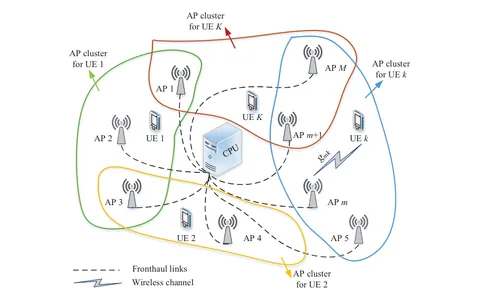
Joint User Association and Power Control for Cell-Free Massive MIMO

Chongzheng Hao, Tung T. Vu, Hien Q. Ngo, Minh N. Dao, Xiaoyu Dang, Chenghua Wang, Michail Matthaiou

Chooses which access points serve each user and at what power to maximise the total data rate, with a learning-based method (JointCFNet) for small networks and a fast gradient method for large ones.
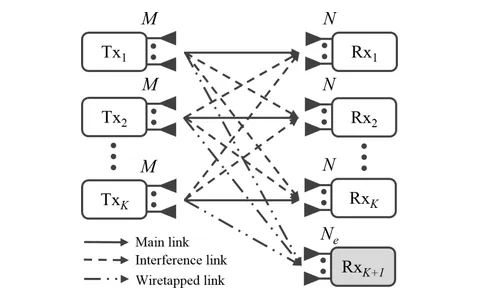
IEEE GLOBECOM 2024

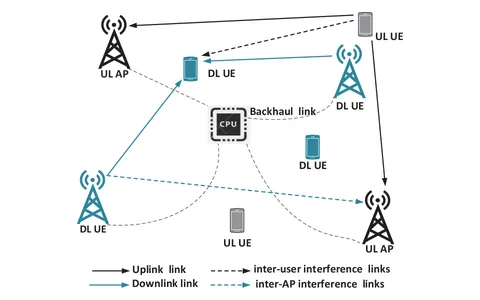
Joint OMA-NOMA Cell-Free Massive MIMO with Limited Fronthaul

Chi Y. Nguyen, Tung T. Vu, Hien Q. Ngo, Michail Matthaiou

Serves some cell-free users with non-orthogonal multiple access and the rest orthogonally under limited fronthaul, giving clearly higher total spectral efficiency than orthogonal access alone, most of all when coherence intervals are short.

DOI

2023

2022

2021

2020

IEEE TWC 2020Top Accessed Article, IEEE TWC 2020

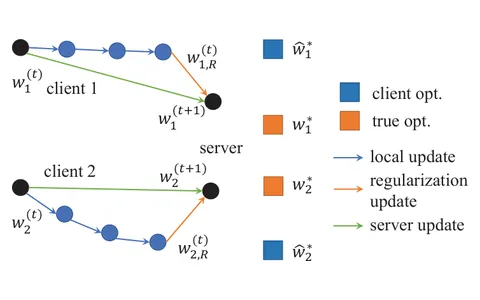
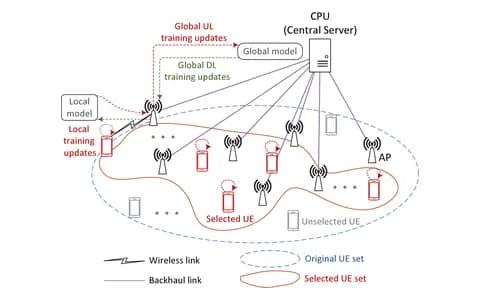
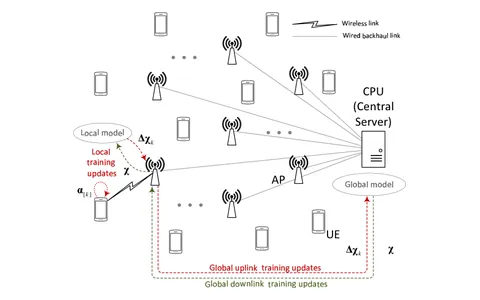
Cell-Free Massive MIMO for Wireless Federated Learning

Tung T. Vu, Duy T. Ngo, Nguyen H. Tran, Hien Q. Ngo, Minh N. Dao, Richard H. Middleton

Proposes cell-free massive MIMO as a stable network for federated learning, and jointly tunes local accuracy, power, data rate and processing speed to cut training time by up to 55% over baselines.
IEICE Trans. Commun. 2020
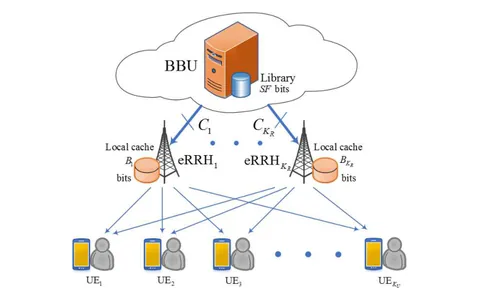
Energy-Efficient Full-Duplex Enabled Cloud Radio Access Networks

Tung T. Vu, Duy T. Ngo, Minh N. Dao, Quang-Thang Duong, Minoru Okada, Hung Nguyen-Le, Richard H. Middleton

Jointly designs precoding, power and rates for full-duplex cloud radio access networks to maximise energy efficiency, which beats half-duplex when self-interference is low.

DOI

2019

IEEE ICC 2019

Full-Duplex Cell-Free Massive MIMO

Tung T. Vu, Duy T. Ngo, Hien Q. Ngo, Tho Le-Ngoc

Analyses full-duplex cell-free massive MIMO, shows that residual self-interference is its main limit, and finds a 140% spectral efficiency gain over half-duplex when that interference is low enough.

DOI

2018

IEEE ICC 2018

Energy-Efficient Design for Downlink Cloud Radio Access Networks

Tung T. Vu, Duy T. Ngo, Minh N. Dao, Salman Durrani, Duy H. N. Nguyen, Richard H. Middleton

Maximises the energy efficiency of a cloud radio access network whose data reaches the radio heads over capacity-limited fronthaul, with an algorithm that solves one simple convex problem per iteration.

DOI

2017

2016

2015